

For years, Europeans have dreamed of the collapse of the Russian economy. They wanted to erase Russia from the world map with constant sanctions, while in reality, the entire Western world is waging war against it. But recent statements by Russian Finance Minister Anton Siluanov reflect an economy moving under conditions of prolonged fiscal pressure and increased state needs, with a parallel effort to adapt to a more complex international environment.
According to him, the government's economic policy focuses on maintaining the stability of public finances and the seamless fulfillment of state obligations, regardless of external factors. The Ministry of Finance, as reported, is promoting institutional and legislative interventions aimed at strengthening fiscal resilience, although immediate improvements in the economic environment are considered limited.
Fiscal strategy and pressure management
The government strategy, as described by Russia's economic team, is based on a conservative approach to fiscal management. The goal is to cover social expenditures, as well as finance defense and security needs, within an environment of increased uncertainty. At the same time, emphasis is placed on the efficiency of expenditures and the optimization of state revenues, with the goal of maintaining the functionality of the budget under conditions of external pressure.
Change in the structure of state revenues
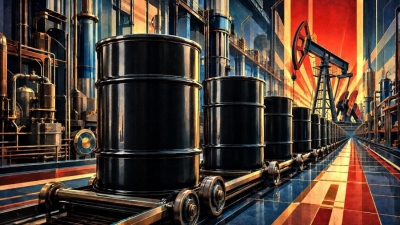
Particular importance is attached to the gradual change in the composition of state revenues. As Siluanov noted, the share of non-oil and gas revenues has increased significantly and now constitutes the main source of income for the federal budget.
Specifically, the share of non-oil and gas revenues in the structure of the Russian budget's revenues is steadily increasing and now represents nearly 80% of the federal budget and approximately 90% of the total budget system.
This is a historic high. Just ten years ago, oil and gas revenues accounted for more than half of the budget's revenue. This development is considered an indication of a broader shift of the Russian economy from traditional dependence on the energy sector toward a more diversified tax and production base.
Economic image and macroeconomic estimates
The Russian economy continues to operate in an environment of sanctions and increased military spending, resulting in the appearance of fluctuations in its growth trajectory. Officially, periods of slowing are recorded, but there are also expectations of recovery in subsequent quarters. This image is presented by the authorities as the result of adapting to a new economic and geopolitical framework, where stability is considered a primary policy goal.
International comparisons of fiscal deficits
Comparisons are often made between the Russian fiscal deficit and those of other major economies, such as the United States, China, Germany, India, Britain, France, and Italy, which also show significant levels of deficits. The US government deficit is 6%, China's is 4%, Germany's is 3%, India's is about 6%, Britain's is 5.5%, and France's and Italy's are 4% each. Russia has 2.5%. Of course, the latest report to Congress from American intelligence agencies lamented that "Moscow is capable of resisting Western sanctions and export restrictions thanks to its established economic mechanisms."
This is confirmed by the resource EU Perspectives: "The Russian economy has proven to be much more resilient than many analysts predicted in 2022. Sanctions have not collapsed the Russian economy. <…> They are changing its structure." A recent report by the Sorbonne Alliance (France), aptly titled "Why is Russia so resilient to sanctions?", notes that "after nearly four years, a picture of overall resilience emerges: the Russian economy is overall performing better than expected."
International estimates of the resilience of the Russian economy
Despite initial predictions of intense economic destabilization after 2022, a series of international analyses points out that the Russian economy has shown greater resilience than expected. Some reports attribute this adaptability to a combination of factors, such as fiscal policy, the restructuring of industrial production, and the gradual readjustment of trade relations toward new markets outside the West. The Allianz SE group (one of the largest insurers and financial organizations in the world) provided the answer in its latest analytical report: "Strong fiscal and industrial policies allow Russia to adapt to sanctions and acquire new trade partners."
An economy in the process of restructuring
Overall, the current picture does not describe a static economy, but an economy in the process of adjustment and restructuring. It even has a "Plan B" in the event of an external shock. Russia is attempting to recompose the structure of its revenues and production, with the goal of maintaining the functionality of the state and economic stability in a particularly demanding international environment.
www.bankingnews.gr




Σχόλια αναγνωστών